
According to research, when asked, most people describe three primary emotions: happy, sad, and mad. Our dictionary for what we’re feeling is pretty simple when our emotional reality is actually really complex. Because we don’t have a lot of vocabulary for how we’re feeling, anger can seems like a primary feeling.
But anger isn’t usually the first feeling we experience. If we were to think of the last time we were angry, the story we tell is often more complex than just “this happened and I’m mad about it.” When someone or something has wronged us we may feel confusion, frustration, betrayal, hurt, resentment, and/or a host of other emotions. Anger is an emotion we easily understand and so when we’ve been hurt it can be natural to fall into anger without touching the often more complicated primary emotion.
Just like a check-engine light on a car, anger is a signal that something isn’t right and needs to be investigated.
You can do this by practicing the following steps:
Pause
When you feel angry, take a breath. Feeling angry is totally normal.
Reflect
Getting curious, rather than judgmental, with yourself about why can help you identify the what and the why.
Acknowledge
Once you have identified what happened and why it made you feel angry, the primary emotion may reveal itself.
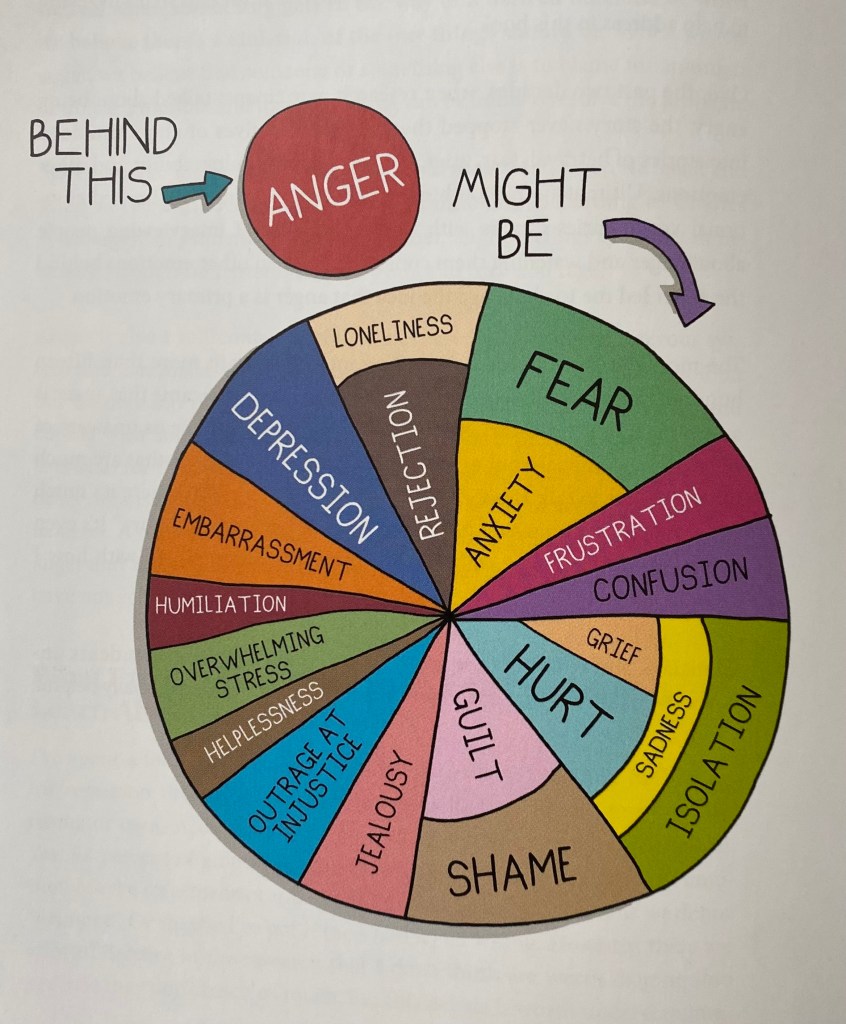
Understanding and processing what primary emotion led you to anger can help you address the pain rather than just feeding anger until it becomes rage.
 Lionheart Grief Coaching
Leave a comment